
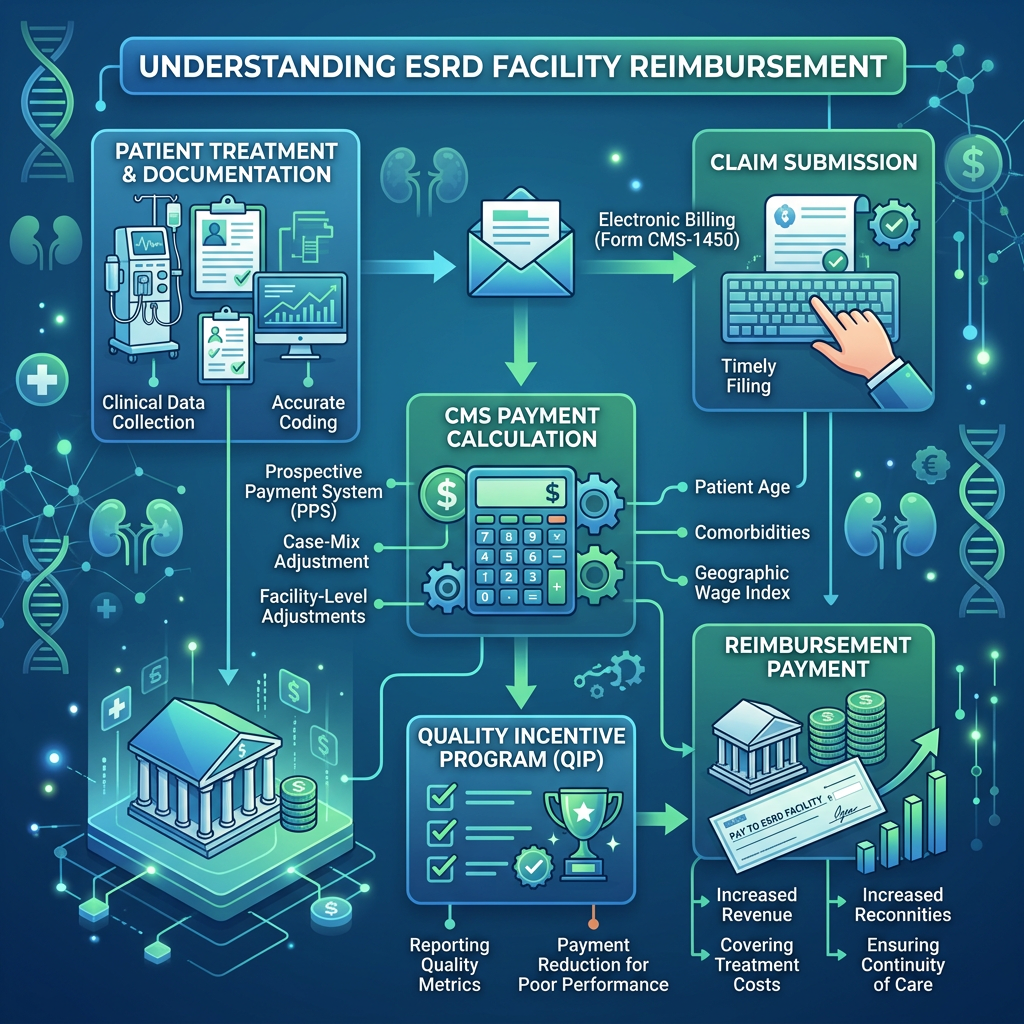
Medicare replaced the ESRD composite rate with the bundled ESRD Prospective Payment System (PPS) in 2011, but the composite rate still matters at cost report time. It determines how much of your Medicare bad debt is reimbursable.
A Quick Overview
The composite rate was Medicare’s original per-treatment dialysis payment. It covered routine labs, certain drugs such as heparin and saline, supplies, equipment, and staff time, while ESAs and most other drugs were paid separately. The ESRD PPS folded both into one bundled rate, but CMS still reimburses ESRD bad debt only for composite rate services.
How It Affects Reimbursement
On the CMS-265-11, your composite rate cost is your total dialysis cost minus the drugs that were billed separately before the ESRD PPS. Worksheet B, column 10 splits drug cost by line:
- Line 2, drugs included in the composite rate (kept in composite cost): heparin, alteplase and other thrombolytics used for access management, saline, dextrose, mannitol, lidocaine and other local anesthetics, antihypertensives, antiarrhythmics, pressor drugs, antihistamines, and insulin.
- Line 3, ESAs (left out): epoetin alfa (Epogen), darbepoetin alfa (Aranesp), and any other ESA, including oral forms.
- Line 4, ESRD-related other drugs (left out): the formerly separately billable ESRD drugs and their oral equivalents, such as IV iron, vitamin D analogs, levocarnitine, calcimimetics, and antibiotics for access infections or peritonitis taken at home. Beginning January 1, 2025, oral-only drugs such as phosphate binders go here too.
- Line 5, non-ESRD drugs (left out): drugs given for conditions other than ESRD and billed separately with the AY modifier. These are excluded from both composite and ESRD PPS cost.
Only line 2 drugs carry into the composite rate cost (Worksheet B, column 11). ESAs and other ESRD drugs flow to columns 12 and 13 and count only in total ESRD PPS cost.
Worksheet E divides composite rate cost by total ESRD PPS cost to get a facility-specific composite cost percentage. Your allowable Medicare bad debt is multiplied by that percentage, then paid at 65%, less sequestration.
For example, a facility with a 90% composite cost percentage and $60,000 of allowable bad debt has their claim adjusted to $54,000. At 65%, less 2% sequestration, it receives $34,398.
Don’t reduce the bad debt yourself. Enter the full Medicare bad debt, net of recoveries, on Worksheet E, Part I, line 12, column 1; it must agree with your bad debt listing. The cost report applies the composite cost percentage in column 2, the 65% on line 16, and sequestration on line 19.
Maximizing Reimbursement Without Overreporting
- Classify drug costs correctly. Composite rate drugs such as heparin, saline, lidocaine, and antihypertensives belong on Worksheet B, column 10, line 2. Reporting them as ESAs or other ESRD drugs lowers your percentage. Moving other ESRD drugs onto line 2 to raise it invites an audit adjustment.
- Claim every allowable bad debt. Include all unpaid Medicare deductibles and coinsurance that meet the 42 CFR 413.89 criteria and were written off during the cost report period.
- Leave out what doesn’t qualify. Waived coinsurance, accounts not yet written off, and balances without documented collection effort stay off the listing.
- Support it on Exhibit 1. List each bad debt by calendar year of service, with billing, collection, and remittance advice dates.
Need help preparing your cost report? At PPS we have over forty years of cost reporting experience and are happy to share our expertise with you! Contact us now for cost reporting assistance.
For information or assistance, we are, as always, here to help! Contact Us via email, website, or call 800-447-2540/ 248-968-4100 for our renowned customer service.
Disclaimer: This blog does not contain legal advice. What it does contain are our best explanations, advice, and suggestions to help facilities and cost report preparers to understand the cost report forms and reporting process and offer suggestions for their preparation. Progressive Provider Services assumes no legal responsibility for the content of this blog, nor for cost reports or other reports prepared based on the content herein.

